What Does a Chimney Liner Do?
The chimney liner — also called the flue liner — is the interior channel that runs from the fireplace or appliance at the base of your chimney all the way to the top of the stack. It performs three essential functions: it contains the products of combustion (smoke, carbon monoxide, and heat) within the flue so they exit safely at the roofline; it protects the surrounding masonry and framing from the extreme heat generated during combustion; and it provides the correctly sized passageway that allows your fireplace or heating appliance to draft properly.
Without a sound liner, your chimney is not just inefficient — it is genuinely dangerous. At Albertson Chimney Sweep, chimney liner installation is one of the most important services we offer to homeowners throughout Albertson, NY, Roslyn, Williston Park, and Nassau County. Understanding what a liner is and when it needs replacement can save you from a costly emergency down the road.
Types of Chimney Liners Found in Nassau County Homes
Nassau County's housing stock spans nearly a century, which means the chimney liners in local homes vary widely depending on when the home was built and whether any prior work has been done:
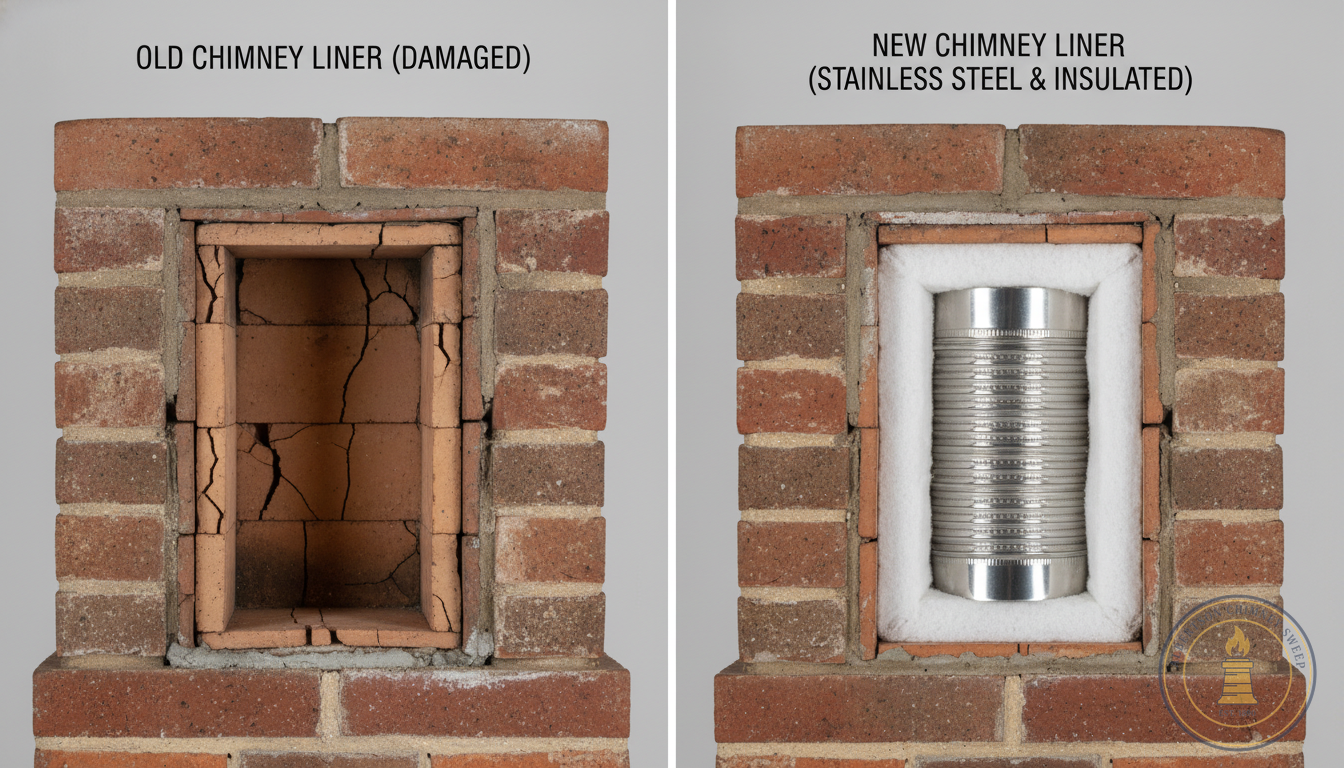
- Clay Tile Liners: The most common liner type in homes built before the 1990s. Clay tiles perform well when intact but are susceptible to cracking from chimney fires, thermal shock, and the acidic condensate produced by gas appliances that were connected to fireplaces designed for wood burning.
- Stainless Steel Liners: The most popular retrofit solution today. Flexible stainless steel liners can navigate offsets and bends in older chimneys, are sized precisely to the appliance being vented, and carry long manufacturer warranties when properly installed and maintained.
- Cast-in-Place Liners: A poured concrete system ideal for severely deteriorated masonry chimneys. A calibrated form is inserted into the flue and a heat-resistant compound is poured around it, creating a seamless new liner that also strengthens the surrounding masonry structure.
- Aluminum Liners: Suitable only for certain gas appliances with low flue temperatures and not approved for wood-burning or oil-fired applications.
How Do Liners Fail?
Liner failure is almost always gradual rather than sudden, which is why a Level 2 chimney inspection with a video flue camera is so valuable. A camera scan reveals conditions that are completely invisible from above or below the chimney, including:
- Hairline cracks in clay tile joints that widen during freeze-thaw cycles.
- Missing mortar between tile sections that allow combustion gases to escape into the surrounding masonry.
- Spalling tile sections where the surface has flaked away, reducing liner integrity.
- Liner sections that have shifted out of alignment at bends or offsets in the chimney.
- Corrosion from acidic condensate in gas appliance chimneys that were not properly relined when the original wood-burning appliance was replaced.
Many homeowners in Mineola and Carle Place discover liner damage for the first time during a pre-purchase inspection when buying a home — one of the key reasons a Level 2 inspection is strongly recommended before closing on any property with a fireplace.
Signs You May Need a New Chimney Liner
While only a video inspection can confirm liner condition definitively, these symptoms warrant immediate professional evaluation:
- Smoke or odor entering the living space even with the damper fully open and a well-established fire.
- Carbon monoxide detector alarms in rooms near the fireplace or connected heating appliance.
- Visible white or orange staining on the exterior chimney masonry, which can indicate combustion gases are escaping through deteriorated liner joints and saturating the surrounding brick.
- A prior chimney fire — even a small one — which can crack clay tile liners along their entire length in a single event.
- Installation of a new gas furnace, boiler, or wood stove that requires a different flue diameter than the original appliance.
If any of these apply to your home, contact Albertson Chimney Sweep to schedule an inspection before using the fireplace or appliance again. We serve Old Westbury, Manhasset, and surrounding Nassau County communities seven days a week.
The Liner Installation Process
When our inspection confirms that a new liner is needed, here is what homeowners can expect from the installation process:
- Sizing: We calculate the correct liner diameter based on the specific appliance being vented, following manufacturer specifications and local building code requirements. An undersized or oversized liner drafts poorly and can create safety hazards.
- Liner Selection: For most wood-burning and oil applications, we recommend a 316-grade stainless steel flexible liner, which provides maximum corrosion resistance and a long service life. Gas appliances may call for a different alloy.
- Installation: The liner is lowered or pulled through the flue from the rooftop, insulation wrap is applied to improve draft and protect the surrounding masonry, and the liner is secured with a top plate and rain cap at the chimney crown and connected to the appliance with a proper collar at the base.
- Documentation: We provide written documentation of the liner specifications and installation for your records, which is useful for insurance purposes and future resale.
Many homeowners in Albertson combine liner installation with a new chimney cap and masonry repointing to fully restore the chimney system in a single mobilization, saving time and reducing overall project cost.
How Long Will a New Liner Last?
A quality stainless steel liner installed with proper insulation, a top-mounted cap, and annual maintenance typically lasts 20 to 30 years. Cast-in-place liners, when installed in a structurally sound chimney, can last the lifetime of the structure. The key to maximizing liner longevity is pairing the installation with consistent annual chimney cleaning to prevent creosote buildup and the acidic corrosion that shortens liner life.
Get an Honest Assessment From Albertson Chimney Sweep
We never recommend liner replacement without first performing a thorough video inspection to confirm it is necessary. If your liner is sound, we will tell you so. If it needs repair or replacement, we will walk you through your options with honest, itemized pricing and no pressure. Call Albertson Chimney Sweep at (516) 789-2242 or email [email protected] to book your inspection or liner consultation. We are available Monday through Sunday, 8:00 AM to 6:00 PM, throughout Albertson, NY and all of Nassau County.